
Caspian Sailing
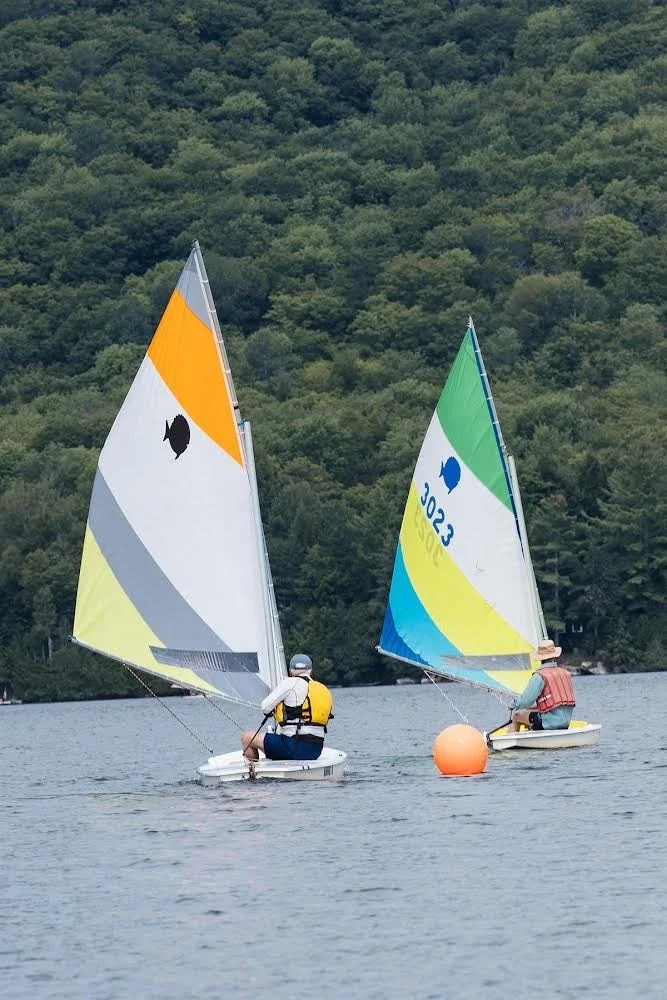
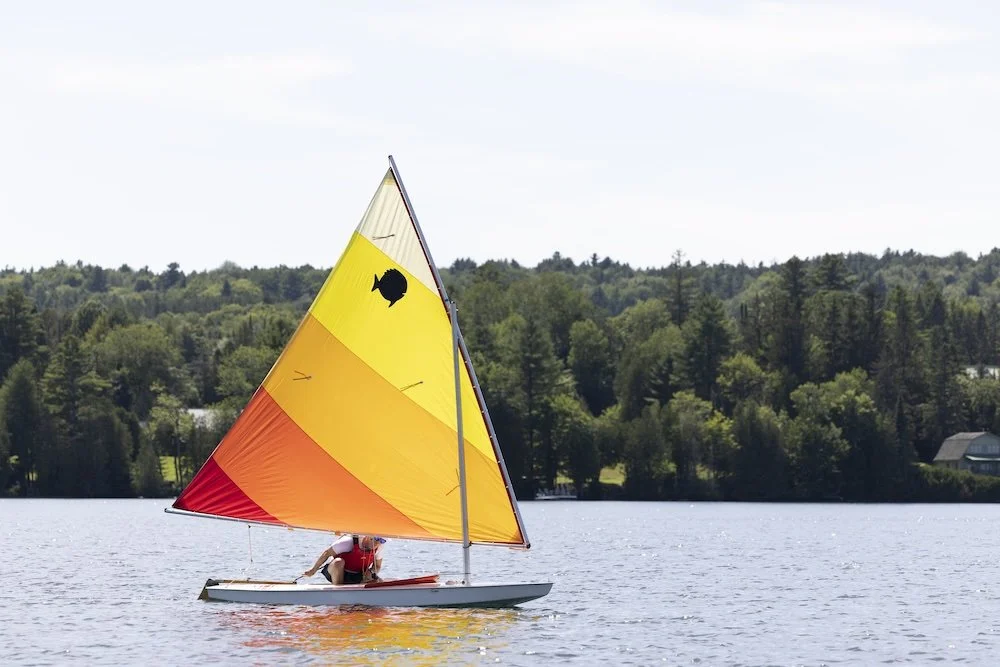
Caspian Lake Sailing sponsors 8-10 races on Caspian Lake each summer. The Greensboro Association has most recently enabled them to buy much-needed new sailing buoys and markers. Races typically take place on Wednesdays and Saturdays in August.
CLS is organized by a core group of advocates promoting love of sailing as a means for building community on the lake. All levels of experience, ages, and boats are encouraged. We offer free and informal instruction. Basically, we see all races as opportunities for learning and teaching. Please come out and join in!
Next summer CLS plans to carry momentum forward with its same programs for July and August - informal/instructional races in July, race series in August. In addition, plans are in the works for a regatta on August 15/16: 5-7 races over two days.
For more information on instruction, for general questions, or to volunteer to help with race committee, please contact:
Paul Landon at paul.landon5@gmail.com
John Jacobs at mossytrails@gmail.com or 617-504-9203
Paul Brierre at greenmtgumbo@hotmail.com
Peter Osterhout at caspianlakesailing@proton.me
The following is a discussion of basic rules and tactics of sailing and sailboat racing. Rules are intended to make sailing safe and racing fair for all. Rules are learned as sailors gain experience. Experienced sailors can help explain rules as they come up. Caspian Lake Sailing is an independent committee formed to further encourage all sailors to come out and enjoy the lake. The committee sponsors races during the summer. Instruction in basic sailing skills, racing tactics, and rules is available before and after all races. Contact John Jacobs at mossytrails@gmail.com for further information.
Basic Rules of Sailing
Right of Way: The boat with the wind coming from the port(left)side must give way to the boat with the wind coming from the starboard(right)side.
Overtaking: The boat that is overtaking must keep clear of the boat being overtaken.
Windward Leeward: The boat that is windward (upwind) must keep clear of the boat that is leeward (downwind).
Obstruction: When sailing in the vicinity of an obstruction, such as a buoy or a reef, a boat must keep clear of the obstruction.
Tacking: When a boat changes tack, it must keep clear of other boats around it.
Starting: The starting line is an imaginary line between two buoys. Boats must not cross the starting line before the starting whistle is blown.
Mark Rounding: Boats must pass around buoys on a designated course in a certain direction.
Protest: If a boat thinks that other boats have violated the rules, it can protest the other boats. A protest must be made in writing within a certain time limit.
Penalties: A boat that has violated the rules must take a penalty, such as a 720-degree(2 circles) turn or a retirement from the race.
These rules are designed to promote safety and fairness in sailing races, and they must be followed by all competing boats.
Basic Racing Tactics:
Start: The start is crucial in sailboat racing. Strategy and tactics for the start often depend on wind direction and competition. Successful starters are able to position their boat in a favorable spot on the starting line with enough speed to maintain control and maneuver as needed.
Upwind Leg: The upwind leg is where most of the tactical decisions are made. The objective is to sail as close to the wind as possible while maintaining maximum boat speed. Sailing in clear air, unblocked by other boats, is important to maximize boat speed.
Tacking: Tacking is a way to change direction when sailing into the wind. It can be used to gain an advantage if done at the right time.
Wind Shifts: Wind shifts can significantly affect a race. Skilled sailors will capitalize on wind shifts by adjusting their course to take advantage of the new wind direction.
Downwind Leg: The downwind leg is where boats sail with the wind behind the, often deploying spinnakers. The objective is to maintain speed and select the best strategy for the leg.
Mark Rounding: Properly rounding marks is critical in sailboat racing. The goal is to round the mark at the shortest possible distance while maintaining boat speed.
Finish: Crossing the finish line first is the ultimate goal in sailboat racing. Often this involves protecting the lead by positioning the boat to prevent others from passing.